
Published: 2026-08-15
Sawdust Hexagonal Briquettes (Ogatan): Production Engineering & Commercial Economics
How hydraulic 200-bar extrusion binds pure wood fibers without chemicals, creating a center-draft channel that cuts restaurant fuel costs by up to 40% with steady 5-hour heat.
5 min
Overview
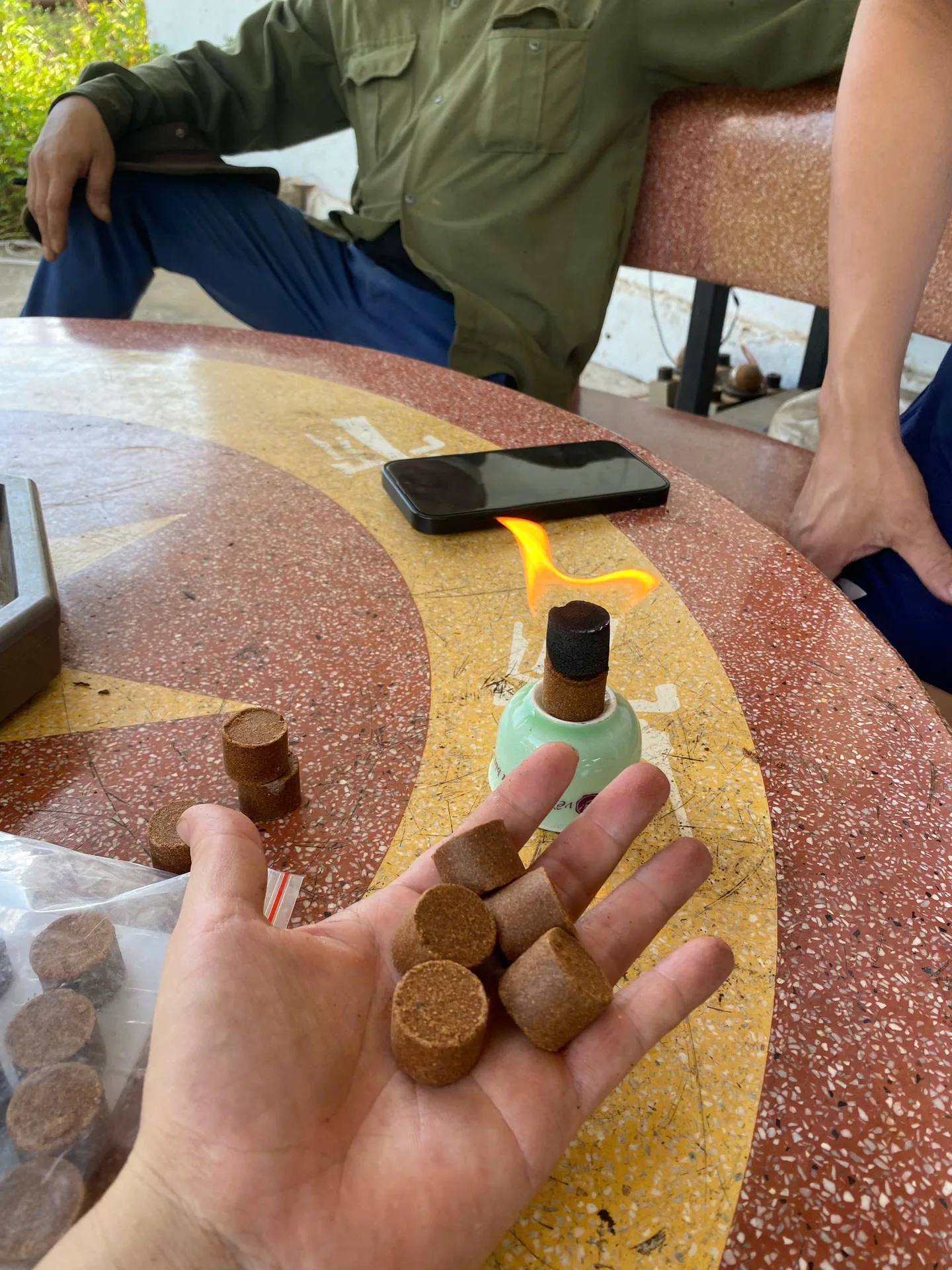
Sawdust charcoal briquettes (traditionally termed Ogatan in Japan) represent the pinnacle of high-density industrial fuel engineering. By recycling clean furniture timber residues and mill shavings, raw biomass is transformed into an ultra-consistent industrial fuel.
High-pressure hydraulic extruders compress the dried wood particles at pressures exceeding 200 bars. Under this immense shear and natural frictional heating (surpassing 220°C), the lignin inside the wood cell walls liquefies and acts as a natural thermosetting binder—requiring zero starch, glue, or chemical additives.
The resulting extruded hexagonal log features a precision central hollow core (10 mm diameter). This internal chimney creates a Bernoulli draft effect, supplying preheated air directly to the combustion boundary layer. This yields a steady, predictable burn lasting 5 to 6 hours at an average calorific yield of 7,900 kcal/kg, delivering up to 40% fuel cost savings over irregular lump charcoal.
Key takeaways
- 100% natural wood fibers bonded via thermo-lignin (Zero chemicals)
- Central draft chimney ensures flare-free uniform combustion
- Up to 40% fuel cost savings for commercial high-turnover BBQ chains